Building with the four modes
Case: Permaculture center
Nov 6, 2025
By: Michiel Knoppert
Below are the very first words and images from the first phase of one of our very first projects.
From Portacabin to Place of Regeneration
A portacabin — small, practical, sufficient. A place for volunteers tending the permaculture garden and food forest. It does the job, but it doesn’t share the abundance or intelligence of the garden and food forest around it. The portacabin is up for replacement, and there's ambition to expand the garden's activities.
So we asked:
What if we reimagined it through Uncivilize's four modes?
What if it became an extension of the garden and permaculture principles?
What if these principles could be experienced in making the building?
What if it became a space where regenerative living becomes tangible and exciting?
Applying the Uncivilize Framework
At Uncivilize, we talk about life happening across four different modes: global, local, domestic, and wild. Most of our modern existence is stuck in global mode — the industrial, commercial, professional, global — while our relationships with nature, place, and each other fade into the periphery.
In the garden and food forest, all these modes are already embraced. We aim to make the building an extension of the mindset and practices of the garden. Incorporating all four modes that make life feel alive — showing how they can shape not just a building, but a more regenerative way of living.
In this project, Uncivilize acts as design partner and facilitator. We help the stakeholders imagine new ways of building, cooking, storing, heating, cooling, and organizing — and find their own balance between modes. We guide the process so the concept stays whole, even as it organically evolves.
Building by Mode
We apply the four modes to how we organize and build. The aim is to reduce dependency on Global Mode systems — high-tech, centralized, and wasteful — and shift toward appropriate- and low-tech solutions that the community can maintain.
To do this, the construction unfolds in two phases. First, local professionals create the structure: foundation, frame, and roof — responsibly, with regional materials and minimal transport. That creates a sheltered workspace.
Then, the second phase begins: a series of workshops where volunteers, neighbors, and students join to complete the rest — from heating and cooling to kitchens and toilets. Through these, people learn and build together. Knowledge stays local. Skills circulate.
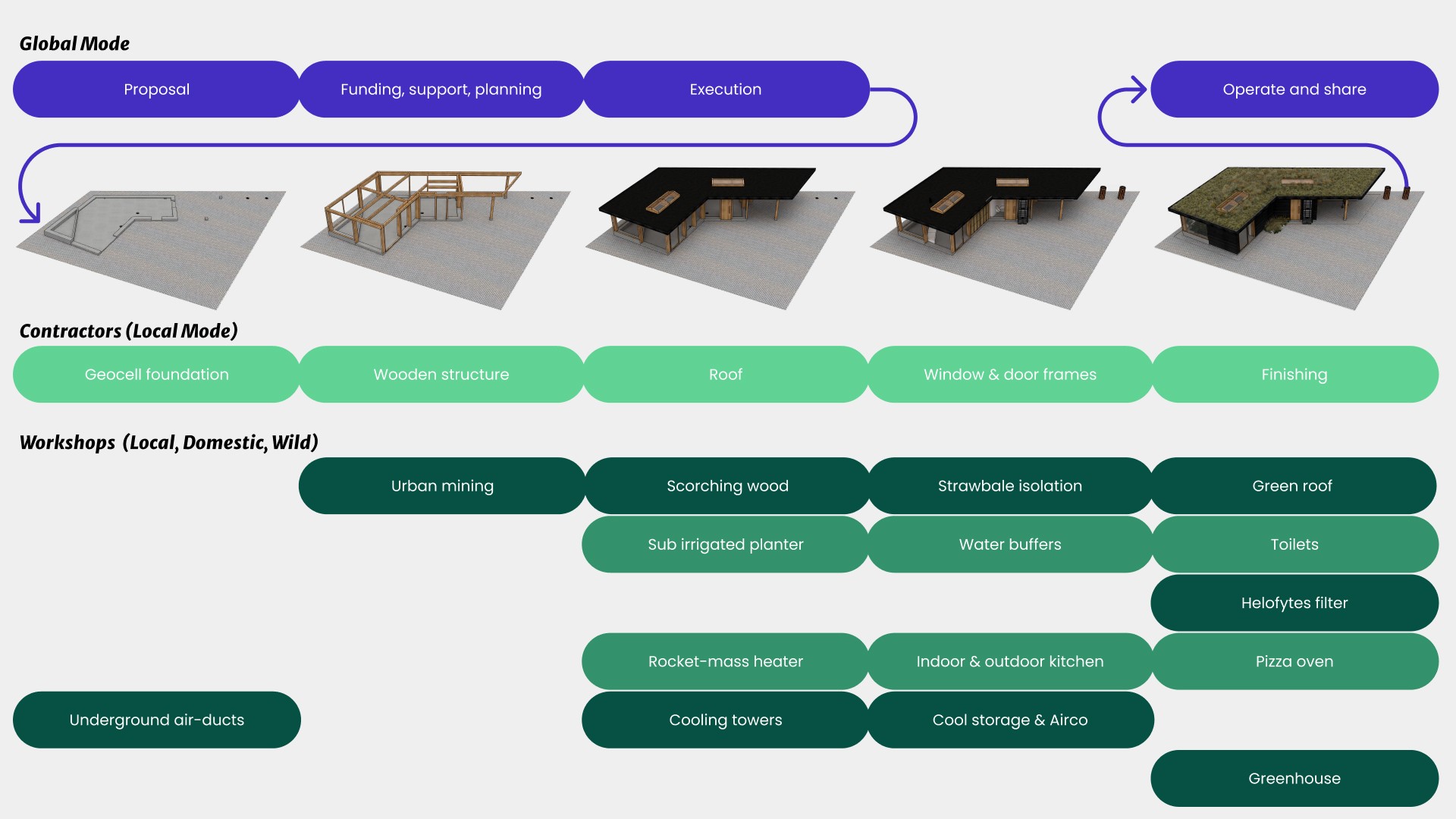
Uncivilize provides design guidance to safeguard coherence and quality. With many hands involved, the risk is a patchwork of mismatched efforts. Instead, the goal is a unified, aspirational space: consistent, smart, and desirable — a place people want to be in and learn from.
Global Mode
Global Mode dominates modern life. It’s the realm of capitalism, mass production, commerce, intelligent systems, efficiency, boxes, excess, individualism, and convenience. In this project, we engage with Global Mode in two ways.
First, we work to reduce our dependency on its infrastructure, products, and services. Whenever possible, we replace wasteful, energy-intensive, linear systems with simpler, local, circular ones. Instead of relying on the power grid, sewage, industrial heating, air conditioning, or dishwashers, we use the sun and biomass from the garden, collect rainwater from the roof, and use our hands to clean and repair. Instead of digital sensors, we use the body and the senses to read what a space needs. Each shift reduces impact, increases autonomy, and turns the building into a living demonstration of balance. As a backup, we still connect to utilities and the internet — the goal is resilience, not isolation.
Second, we embrace Global Mode expertise. This is where planning, coordination, and creative direction take place — the skills that hold a project like this together. They ensure the building doesn’t become a patchwork of good intentions but an aspirational and coherent whole. Professional design brings clarity and beauty; project management keeps the process on track. Fundraising, communication, and documentation allow others to learn from it — and perhaps replicate it elsewhere.
In short: we minimize Global Mode’s footprint, but we value its intelligence.
We use it not to produce, but to guide, organize, and amplify.
Local Mode
Local Mode grounds the project in place and people. Local builders construct the essential frame — foundation, structure, roof — and create a covered workspace that becomes the stage for the workshops that follow.
From there, the place is shaped through a series of workshops. We invite volunteers, neighbors, students, and future stewards to learn and build. Each workshop adds another element to the building.
Heating:
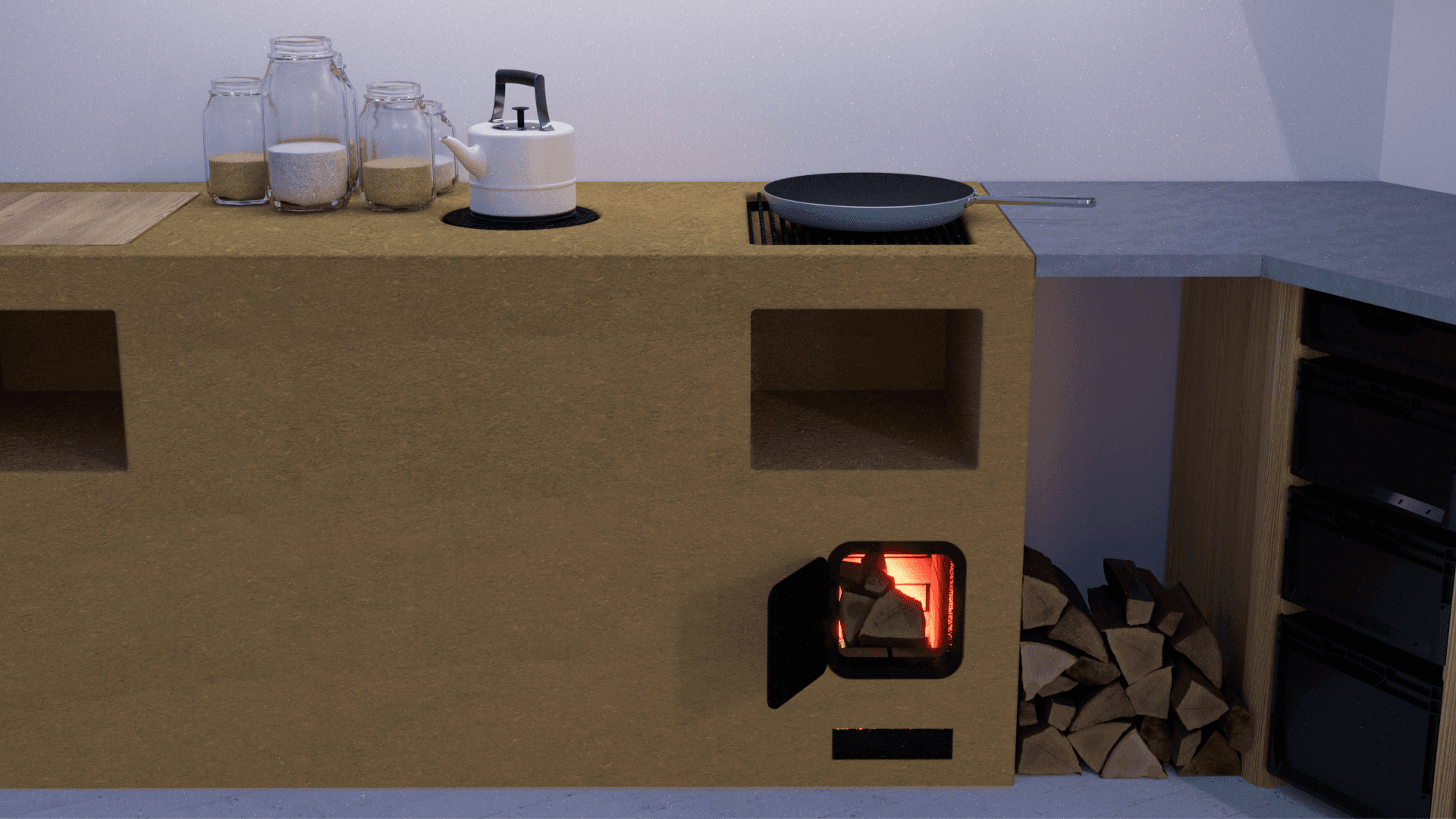
Sunlight pours through south-facing windows, warming the thermal mass of the rocket heater bench. It releases warmth slowly into the night. When needed, the rocket heater runs on biomass from the garden — burning cleanly and efficiently.
Cooling:
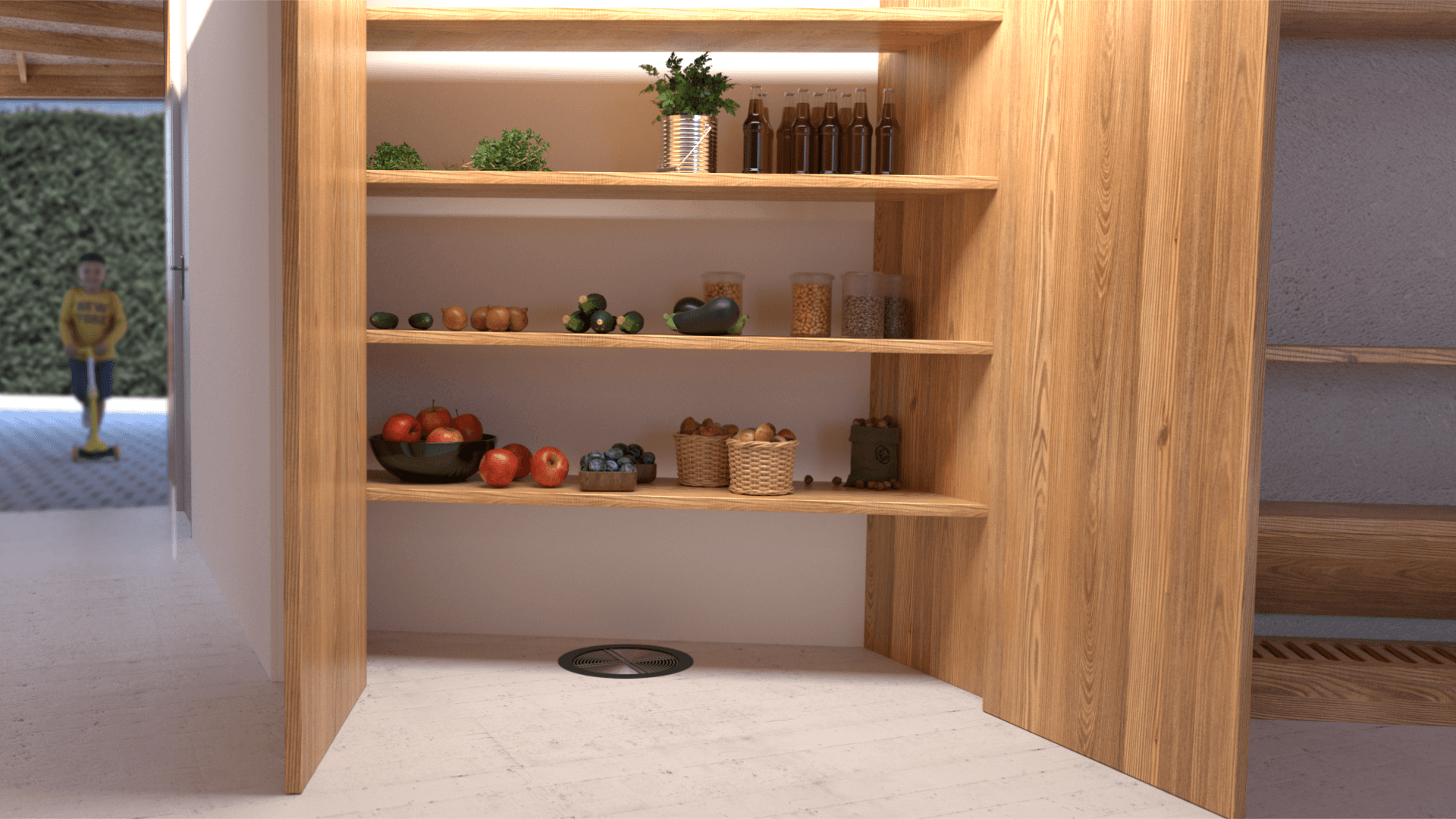
A passive cooling system stores and preserves harvests. Air enters through shaded intake towers cooled by evaporative water jackets, then passes through underground ducts that lower its temperature before circulating through the cold store.
Water:
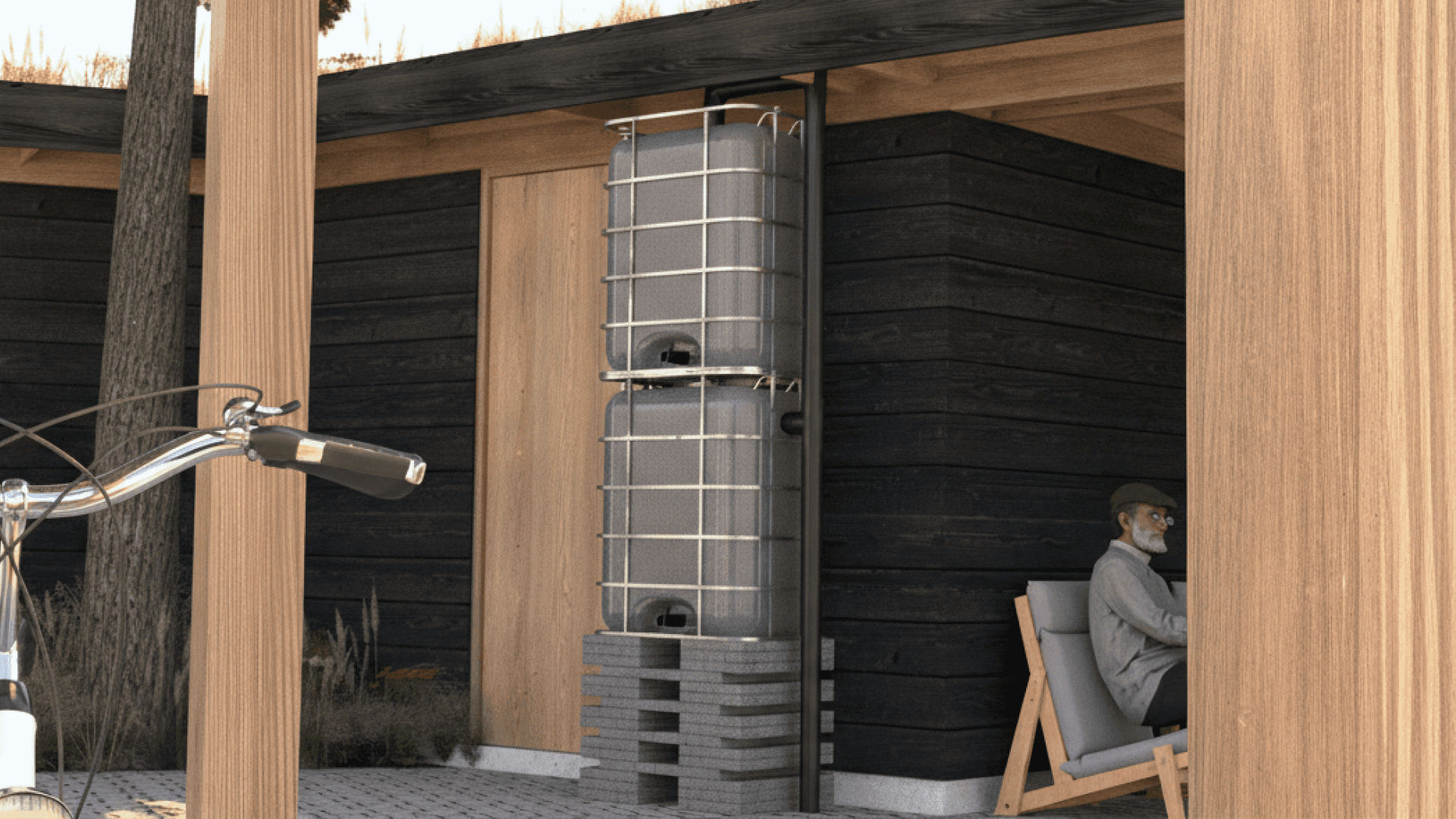
Rainwater from the roof passes through the green roof’s natural filter and collects in raised IBC tanks. Gravity provides pressure for toilets and taps. This water replaces a lot of the total water need but for drinking water there are taps that provide potable water from the water mains.
Each element that gets added through the workshops strengthens the social fabric. People build the place — and in doing so, the place begins to build the community.
Domestic Mode
During the building phase, this mode comes alive through workshops where students, volunteers, and neighbors learn how to build — not just in theory, but in practice. They see how low-tech systems work and how they can produce comfort, beauty, and warmth. When people join the building workshops, something shifts. They leave tired and dirty, with new friends, and a quiet kind of confidence. They begin to understand that heat, light, and food can be produced, rather than bought.
Once the building is ready, the workshops continue. The focus shifts from construction to use. Participants learn how to work with what the garden offers — how to store, preserve, and prepare food from the permaculture garden and food forest. Many of these crops are unfamiliar, as are the rhythms of the seasons themselves. Here, people rediscover ways of eating that follow time and place, not supply chains.
Indoor kitchen:
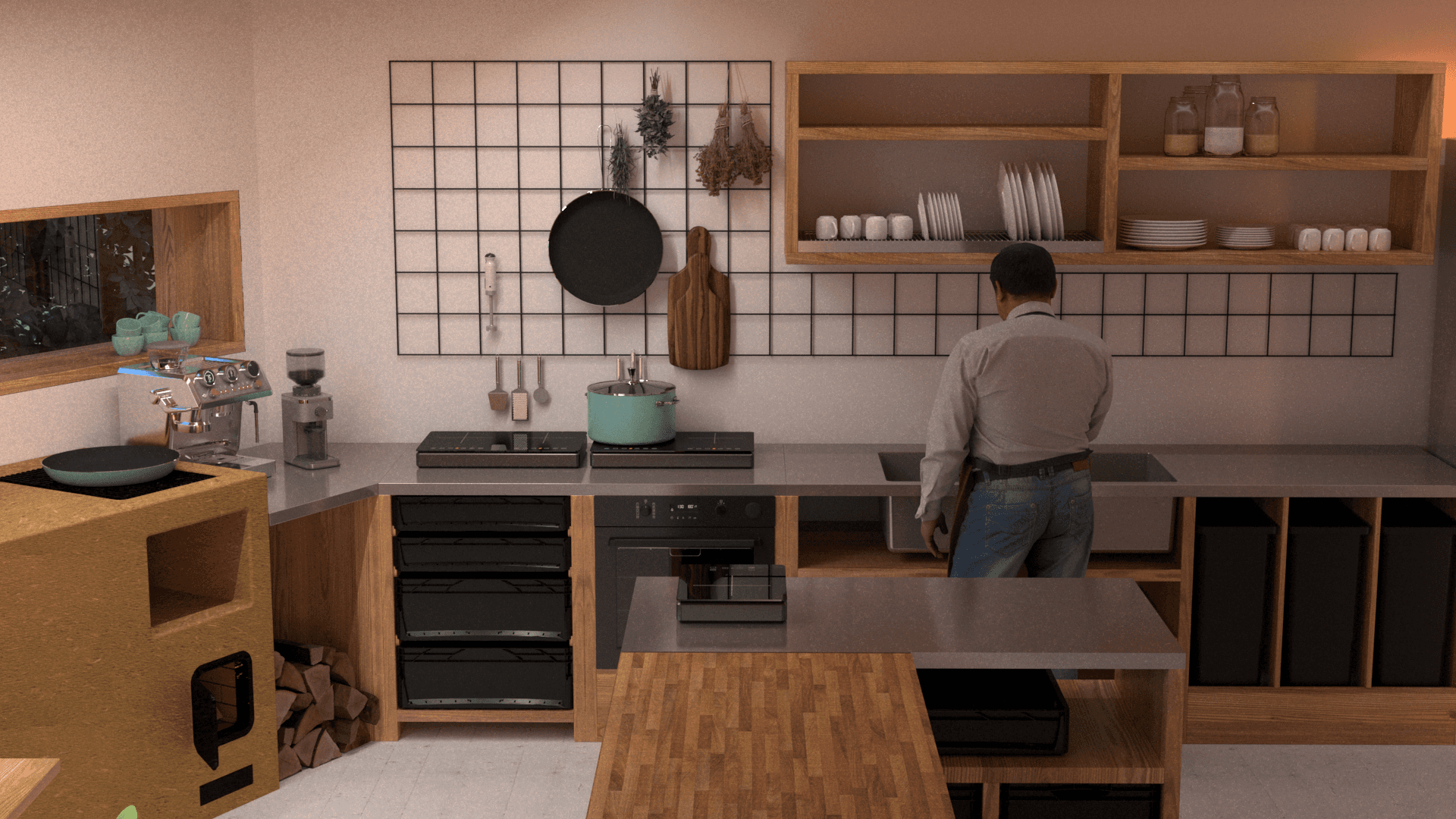
The indoor kitchen is built like the rest of the project — from what’s near, simple, and sufficient. Euronorm crates form the base, solar power fuels the tools, and the rest comes from people’s hands. It’s a place where learning happens through practice: cooking, fermenting, experimenting with what the garden gives. You leave knowing that energy, food, and warmth don’t need to come from systems — they can come from place, from skill, from care.
Outdoor kitchen:
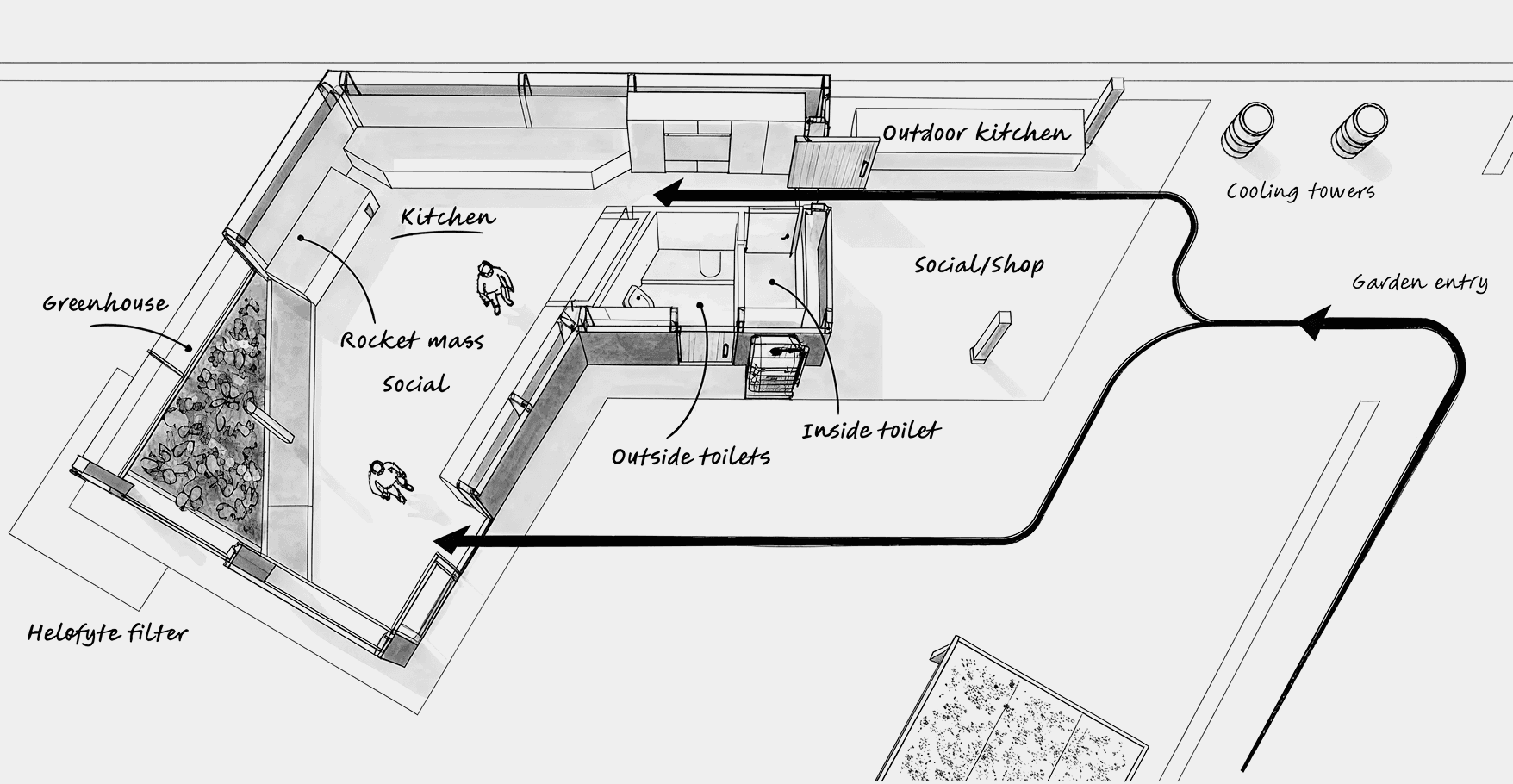
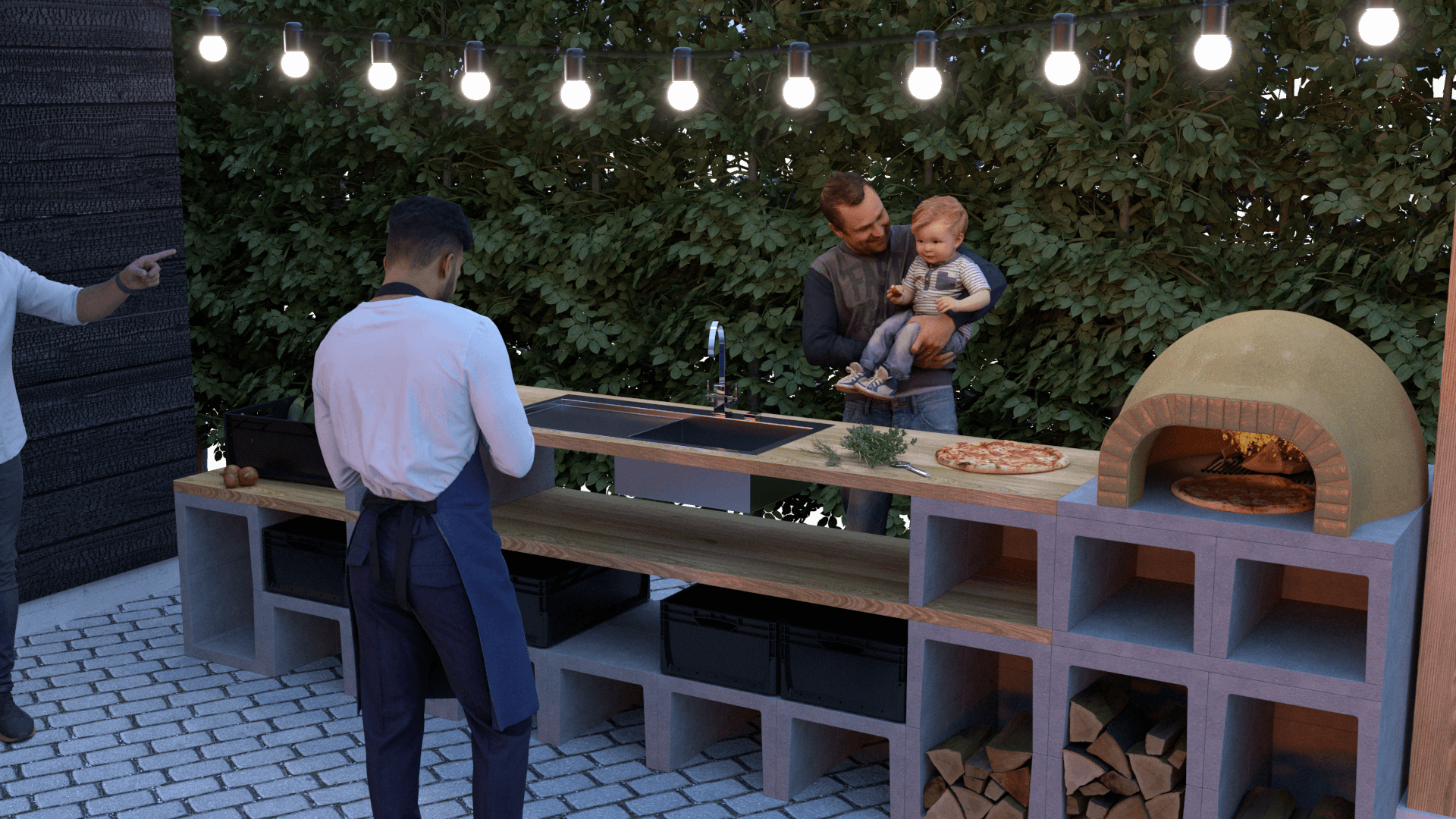
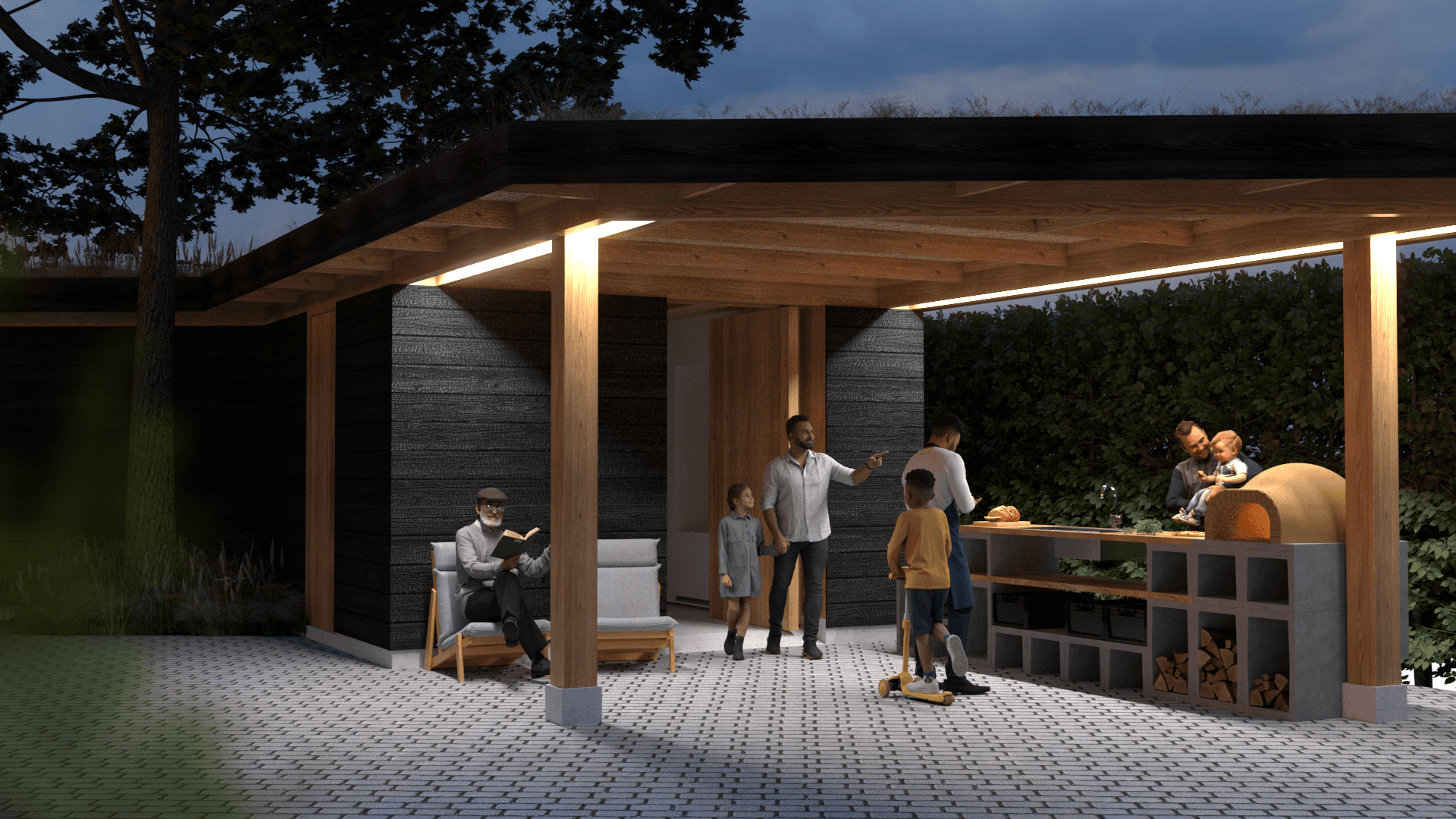
The outdoor kitchen extends the same principles into the open air. Made from reused concrete U-forms and the same grid as the indoor kitchen, the design invites improvisation — a space that transforms with season, or event, from kitchen to pop up store. Here, people gather to cook, share meals, and learn together under a simple roof.
Domestic Mode turns learning into living. People change not because they’re told to, but because they’ve felt what another way of life can be.
Wild Mode
Wild Mode illustrates the power of a reciprocal relationship with nature. The green roof, for instance, doubles as refuge and resource — it offers a habitat for pollinators and acts as a seed bank, while also cooling the building, filtering rainwater, and buffering it. The trees around the site shape shade and light; the building actually improves the surrounding ecosystems while benefitting from them.
It also shows we can close the loops that industrial systems have broken. Waste from human activities becomes resource for garden and food forest. Humanure nourishes soil. Soil grows food. Food returns to the kitchen. People can see and experience many of these cycles in action for example through the three different toilets on site, each showing a different way to turn human waste into fertility rather than pollution.
Urinal:
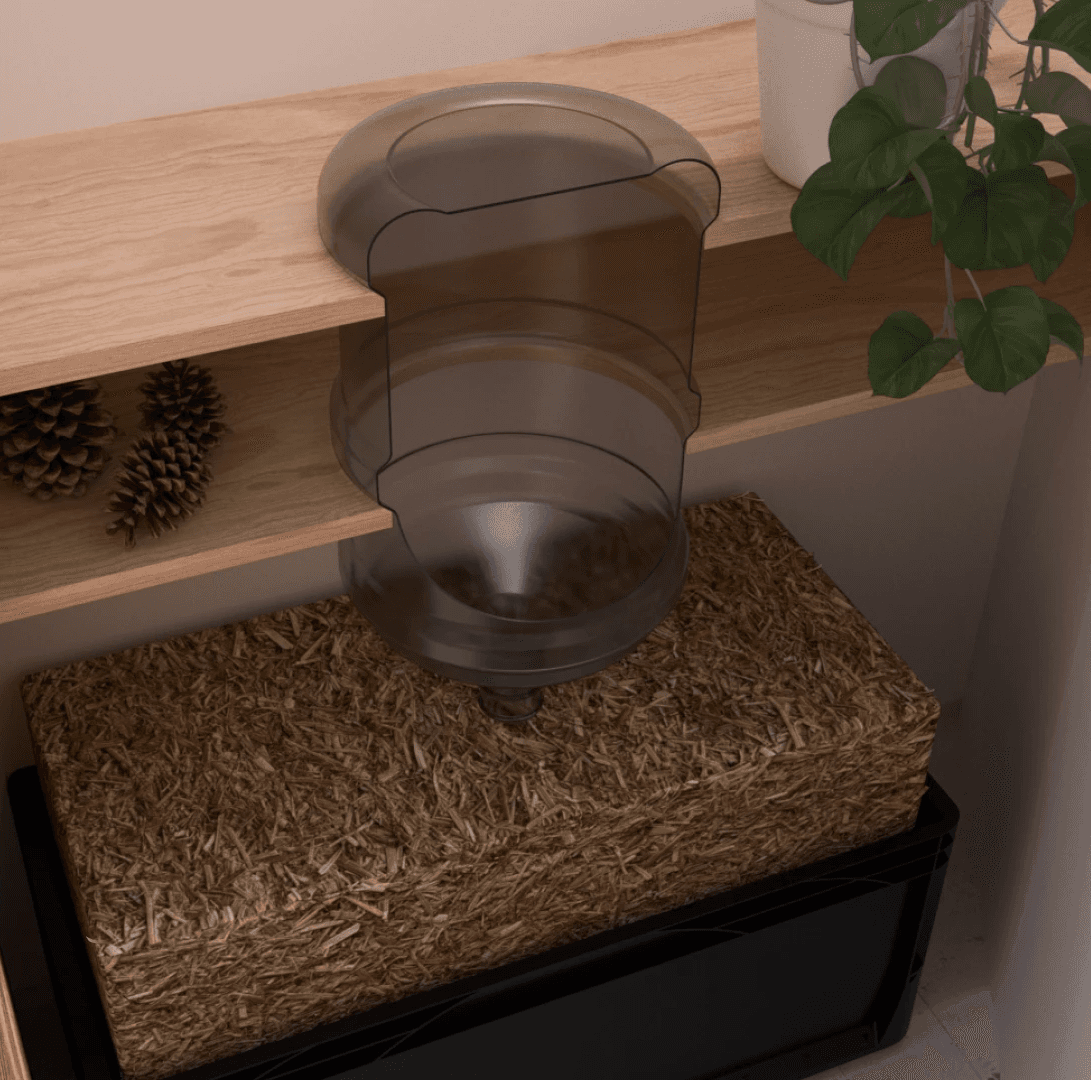
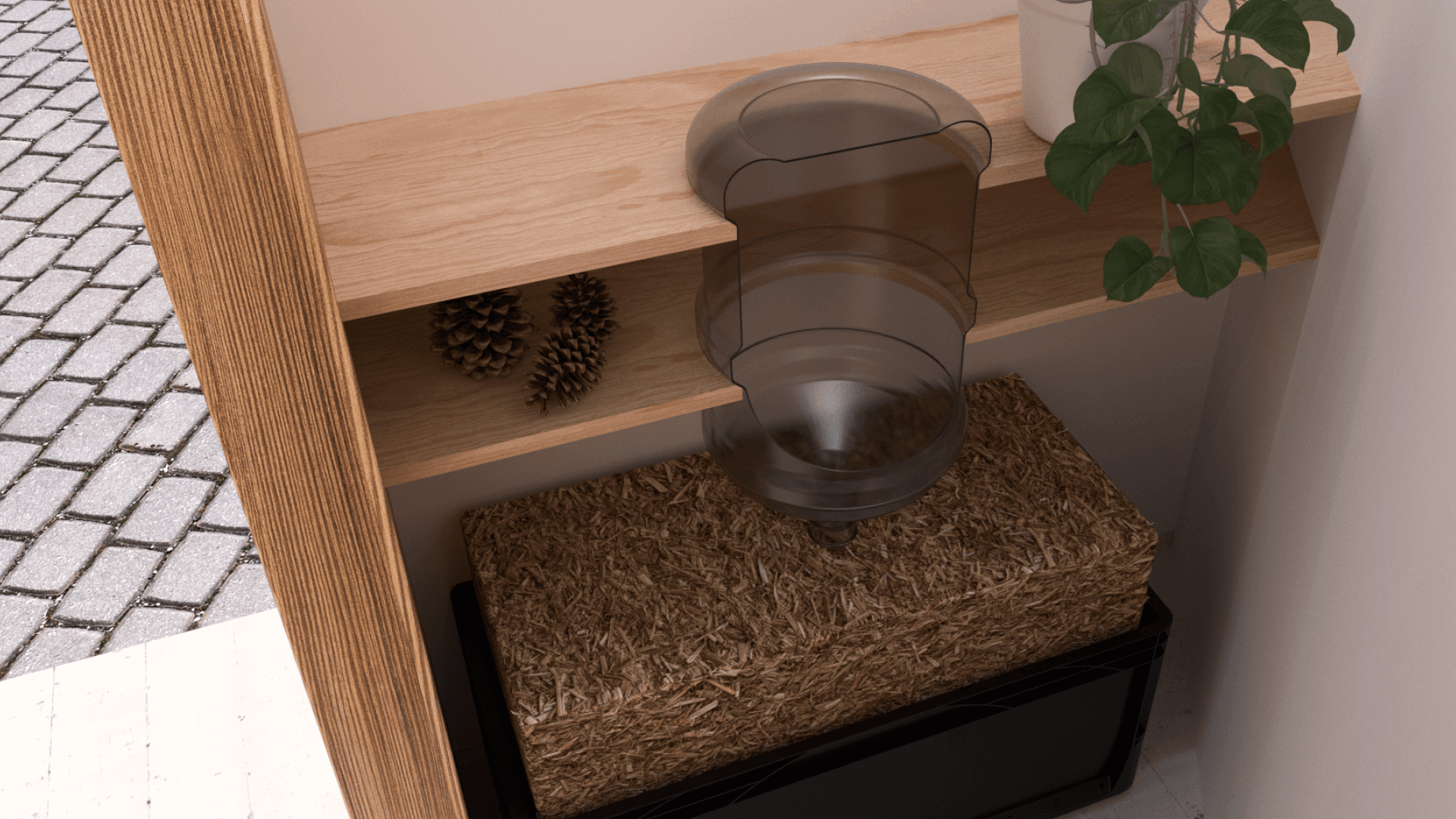
This straw-bale urinal turns waste into resource through pee-cycling. Urine, rich in nitrogen, activates composting in the straw, creating what’s often called a “pee bale.” Over time, it breaks down into nutrient-rich mulch that feeds the garden again. No pipes, no water, no waste — just a reminder that even our simplest acts can nourish life.
Dry toilet:
The compost toilet works without water, chemicals, or sewage. After each use, sawdust from a nearby lumberyard is added to balance carbon and moisture. Aerobic decomposition transforms the contents into fertile humus — an invitation to see even this most private act as part of nature’s continuous loop.
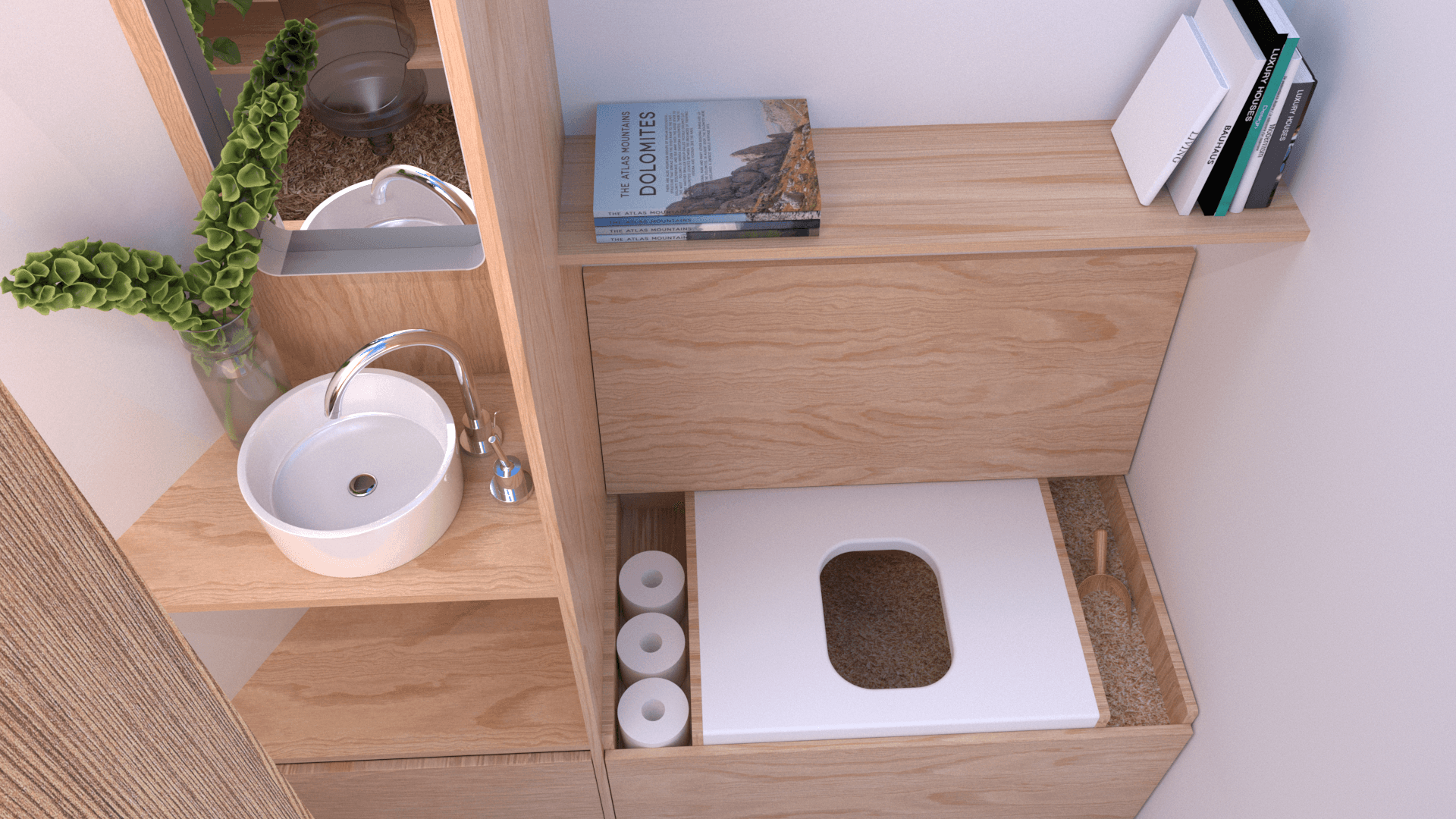
Wild Mode makes reciprocity visible. It shows that when design includes nature as an equal partner, nothing is waste — everything circulates, supports, and begins again.
A Building That Teaches
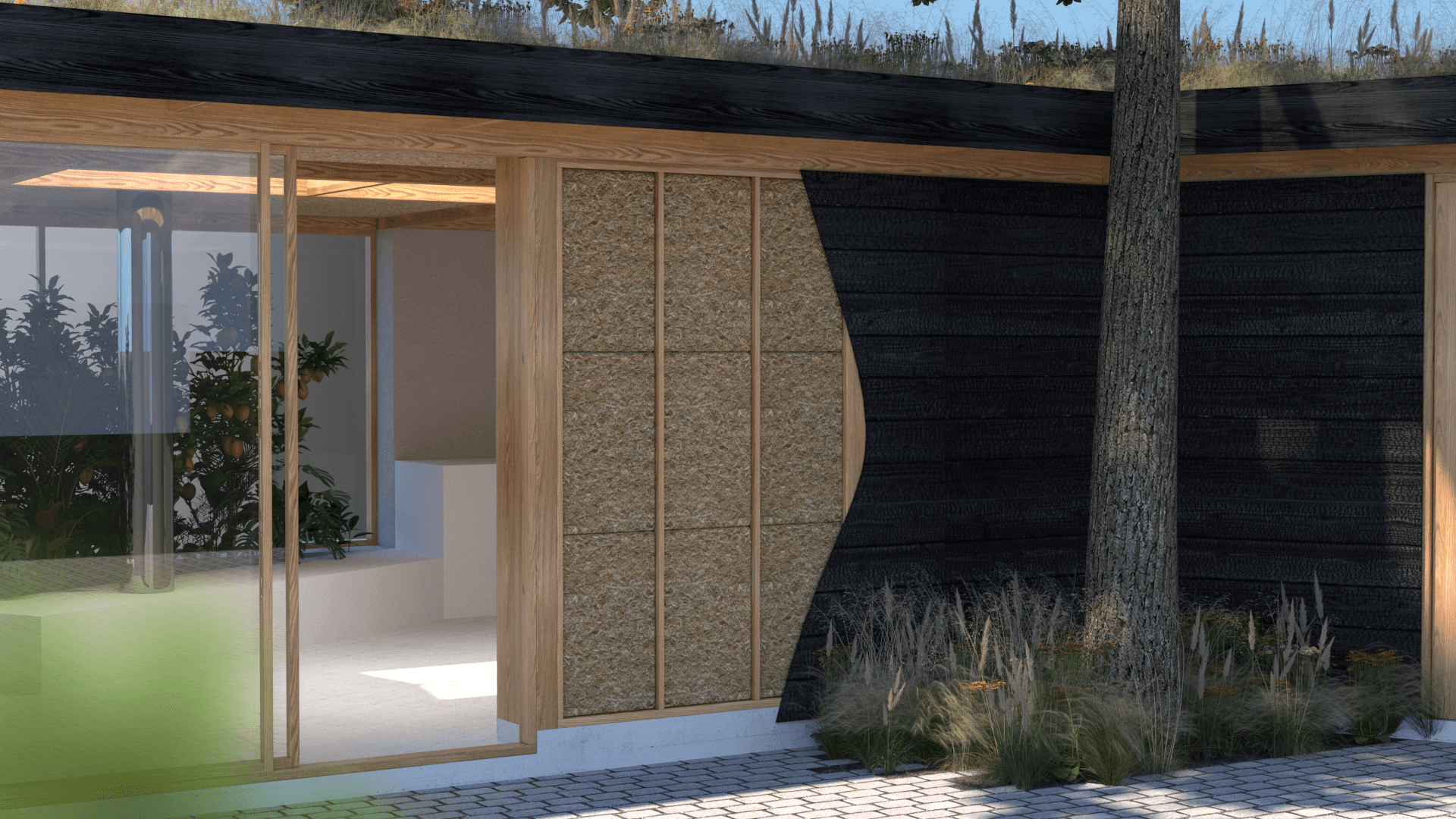
Even before it’s finished, the building is a teacher — a place to see what’s possible when you tap into regional resources, community, your own skill and energy and nature’s abundance. Touch the walls and you touch straw from a nearby field. Sit on the bench and you’re warmed by yesterday’s pruning. Open a hatch and cool air flows in, tempered by earth and water. Pull up your pants and realize you’ve just contributed to the garden and the meal you just prepared.
Learning becomes physical.
Belonging becomes built-in.
Design becomes invitation.
By the time the work is done — and even long before — this place will already be doing what it’s meant to do: forming friendships, sharing meals, growing confidence, and weaving new connections between people and the living world that holds them.
This place creates:
More community
More skills
More biodiversity
More meaning
More resilience
More joy
This project embodies what Uncivilize stands for:
That we can reconnect with others, ourselves, and nature to live better lives.
That transition can be exciting, creative, and beautiful when put into practice.
That everything we need to begin already exists — within reach.